
School gardens as a learning and livelihood system
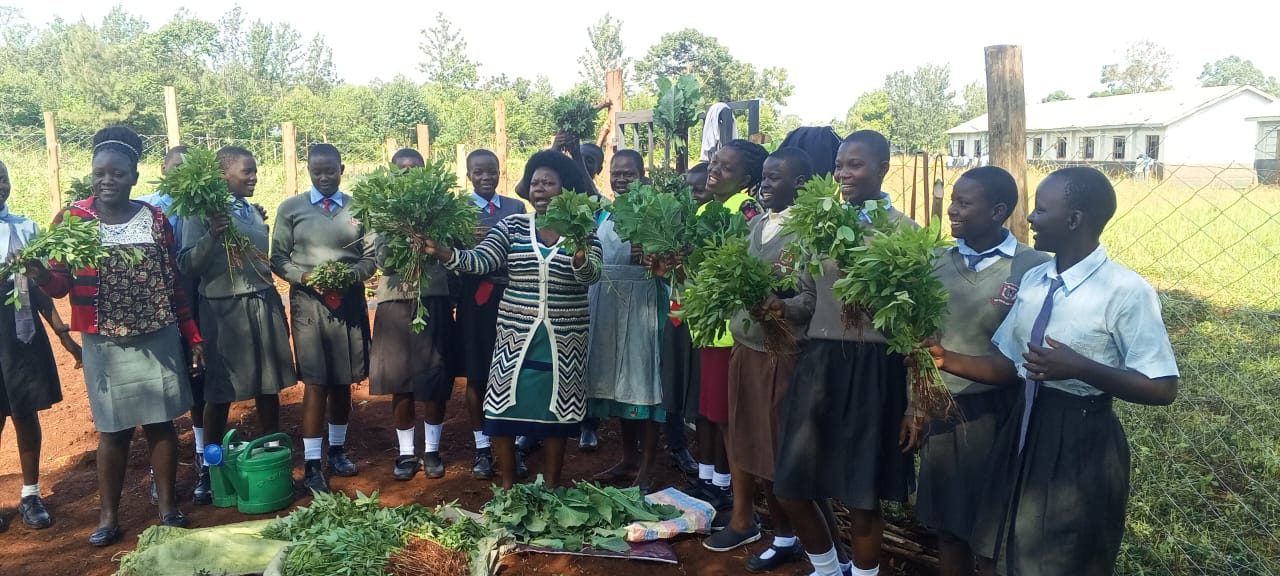
Audience conversation · EKYAN
How young agripreneurs, public schools, farmers and markets connect across four Kenyan counties.
A living classroom connects learning, school meals, household practice and local enterprise.
01 · Programme at a glance
Kenya · Kirinyaga, Busia, Kisumu and Samburu
Rural and mixed farming systems, from high-potential zones to arid pastoral lands.
2024 pilot → 2025–26 scale → 2026 new phase
The model began in Kirinyaga, expanded to three counties, then launched a deeper last-mile phase.
Schools + youth + farmers + public and private partners
Kuza Biashara, UNICEF, Generation Unlimited, county governments and 40 companies.
256 schools · 64 Centres · 512 agripreneurs
100,000+ farmers reached and 11,000+ students engaged since 2024.
“EKYAN did not just train me. It gave me the confidence, tools and community trust to turn agriculture into a real business.”Youth agripreneur · Year 2 endline
“Through the school demonstrations, I was able to see practices working for myself.”Farmer · Year 2 endline
02 · Timeline
The journey shows deliberate adaptation: prove the model, test it across contrasting farming systems, then deepen delivery.
2024
Pilot
Kirinyaga
School demonstration plots and agripreneur-led training tested and refined.
2025–26
Scale
Busia · Kisumu · Samburu
400 agripreneurs, 50 Centres of Excellence and 8,008 learners in Year 2.
Sep 2026
Deepen
Kisumu launch
A new phase strengthens last-mile household support across eight sub-counties.
Now
Next frontier
Depth before breadth
Mentorship, timely inputs, structured markets and broader AI advisory.
Evidence boundary: cumulative figures cover 2024–today; Year 2 results cover 2025–26 and are reported separately.
03 · Outcomes
The strongest reported outcomes span livelihoods, learning, production, diets and climate resilience.
Youth livelihoods
MeasuredKES 13k → 30k
Median monthly agripreneur income
99.5% reported income growth
Education
Measured8,008
Young learners reached in Year 2
95.8% see agriculture as an opportunity
Agriculture
Measured66%
Farmers fully adopting new practices
51,425 farmers engaged in Year 2
Nutrition
Measured81.2%
Households eating more vegetables and ALVs
48.8% had no prior nutrition information
Resilience
Measured79.8%
Adopted soil and water conservation
Water-smart and regenerative practices
Ecological diversity
ObservedObserved
More diverse crops in plots and kitchen gardens
No biodiversity index was reported
04 · How change happens
Teachers and agripreneurs make agriculture practical on demonstration plots.
Learners and farmers see regenerative and nutrition-sensitive practices working locally.
Agripreneurs follow up and connect households to advice, inputs and services.
Harvests support meals; practice can transfer to farms; enterprise links reach markets.
Adoption, income, learner reach, harvest weight and dietary change.
Learning carried home; community confidence builds around visible practice.
Longer-term education, ecological diversity and livelihood effects need continued measurement.
05 · The school garden model
People & activities
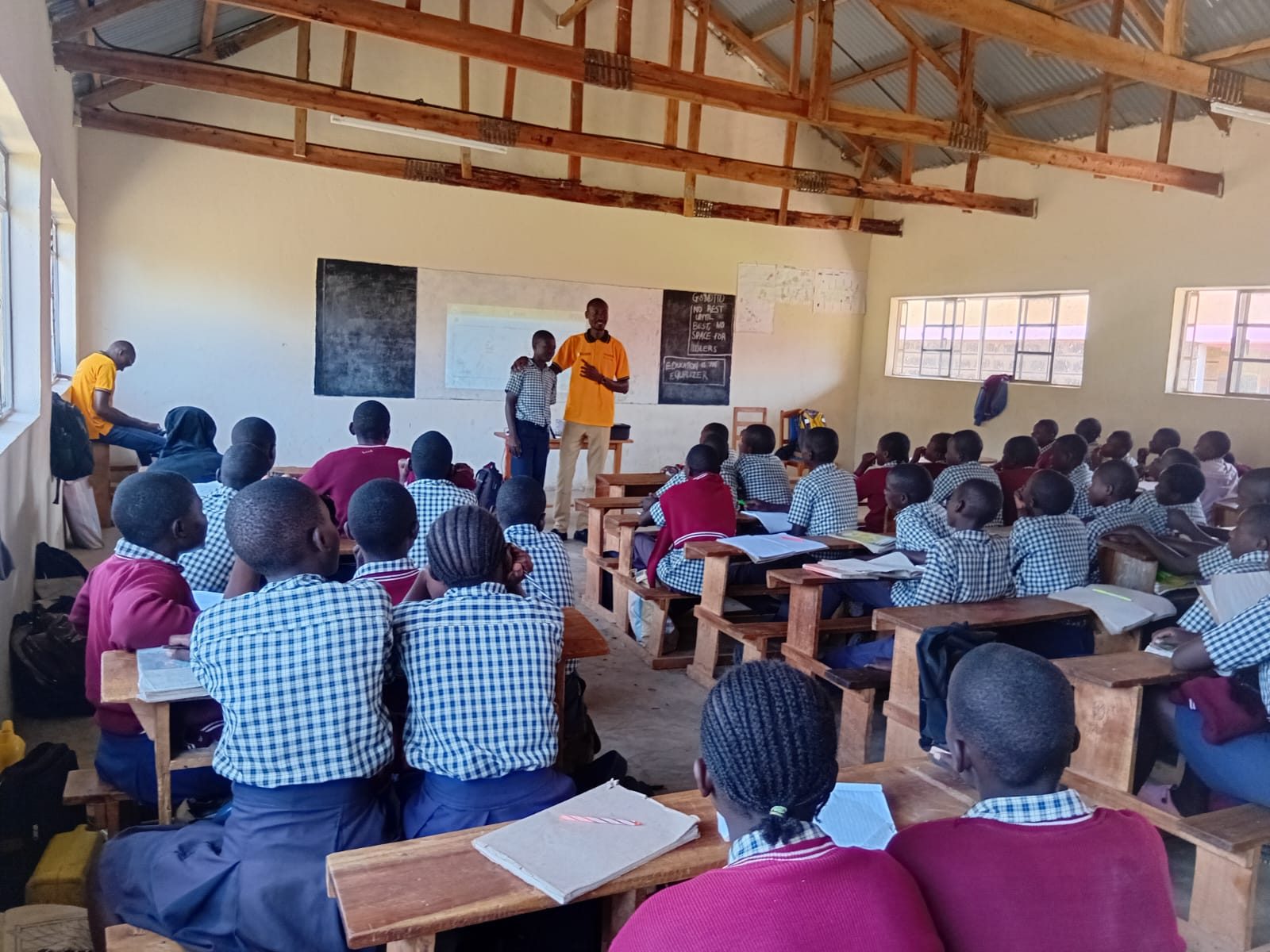
Typical components
Demonstration plots, kitchen and sack gardens, raised beds, compost, zai pits, irrigation, diverse leafy vegetables, curriculum links and digital learning.
Connections beyond school
Evidence gap: seed-bank coverage is not reported in the current evidence.
06 · Enabling conditions
Institutional spine
Kuza Biashara · UNICEF · Generation Unlimited · county governments · schools · 40 private-sector companies
07 · Learning
Worked
School demonstrations, agripreneur follow-up and blended digital learning helped turn knowledge into action.
Did not work equally
The remaining last-mile barrier is timely access to quality, affordable inputs; AI advice is strongest in poultry and not yet equally broad.
Surprised us
Current stories indicate that practical school plots can influence farmer confidence and carry learning into households.
Measured claims are from the EKYAN Year 2 Final Report, March 2026. Interpretive learning is labelled separately.
08 · One question for the group
What would you test next?