LinkedIn · 2025-11-28
How soybean is creating new income pathways
How Soybean is creating new income pathways and why youth like Cynthia are betting big on it
Soybean is one of Kenya’s rising star crops. It fixes nitrogen, matures in 3–5 months, and feeds booming animal-feed and edible-oil markets. Yet yields remain modest (below one tonne per acre) while demand keeps rising. What many farmers don’t realise is that soya is one of the most climate-resilient crops they can grow, improving soils, reducing fertiliser use, and withstanding erratic rainfall better than most cereals.
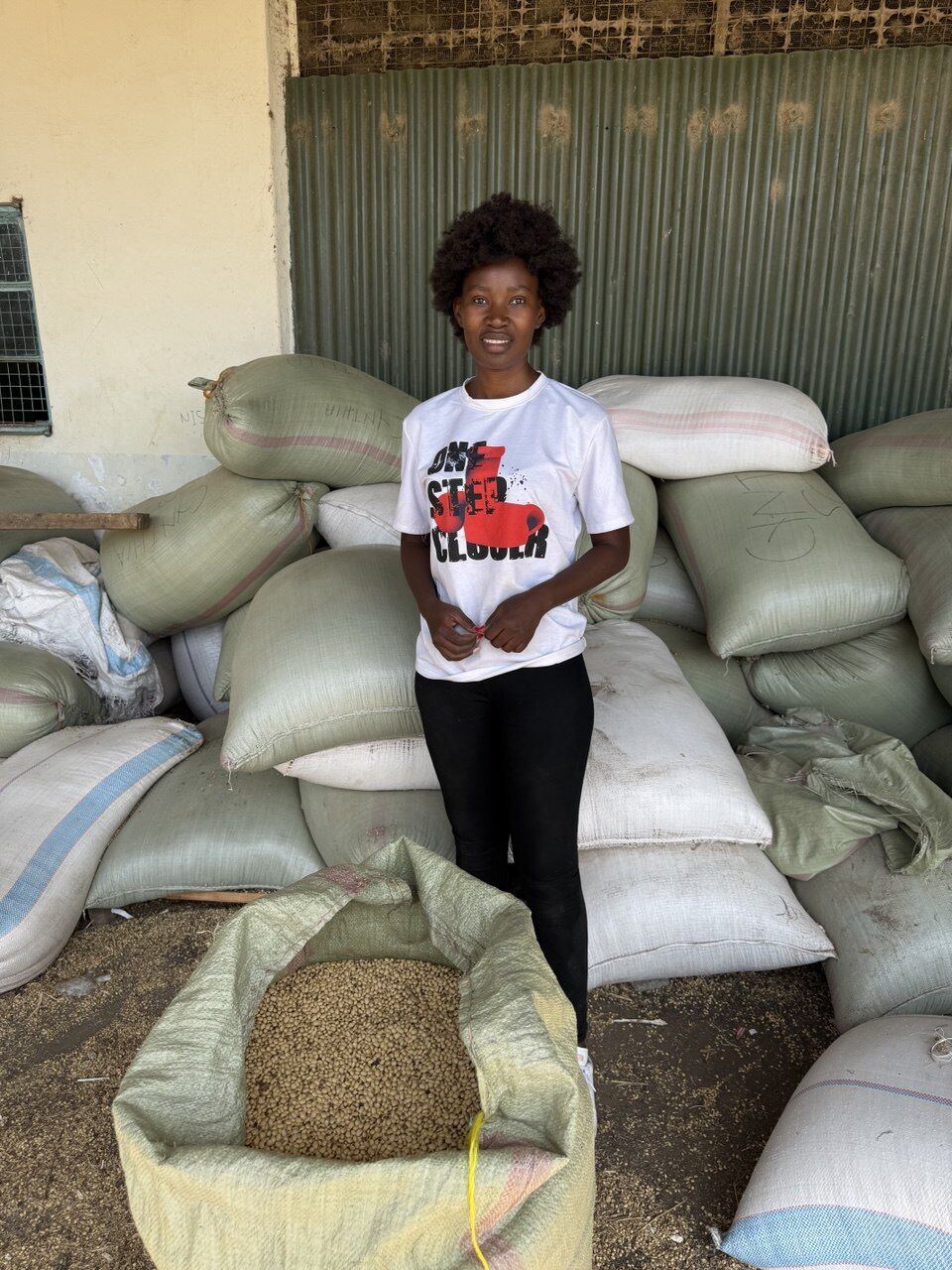
Meet Cynthia, a youth agripreneur in our Kuza One (Kuza Biashara) network. She works with 70+ farmers, helping them adopt better agronomy, digitise records, and aggregate their harvest for reliable offtake. Her model is simple but powerful: if each farmer produces around one acre yielding one tonne, then at roughly Ksh 70 per kilo she can aggregate 70 tonnes, a gross value of about Ksh 4.9 million.
Because soya fixes nitrogen, every acre planted reduces fertiliser demand, lowers emissions, and improves soil moisture retention , crucial in these seasons of unpredictable rainfall.
But challenges remain. Farmers face input gaps, moisture stress (especially at flowering), and limited extension support. Varieties like SB19 need timely rainfall to hit their 850–1,000 kg per acre potential. For Cynthia, costs around transport, drying, sorting and credit are major hurdles. And even though many farmers prefer maize, rotating maize with soya breaks pest cycles, improves soil structure, and reduces climate risk.
Using realistic margins, Cynthia works with assumptions of about 1,000 kg per acre at Ksh 70/kg → gross Ksh 70,000/acre; after about Ksh 40,000 in costs → profit of roughly Ksh 30,000/acre. Even at this margin, farmers gain both income & resilience, a rare combination.
And the upside is even bigger. At 1.5 tonnes per acre farmers can earn upward of Ksh 105,000/acre. Scaling aggregation, strengthening farmer training, and building forward contracts can unlock this potential. Through Kuza One (Kuza Biashara), linking agripreneurs to buyers, and promoting climate-smart rotations, we see how better seed, healthier soils, and predictable offtake improve both yields and resilience across communities.
Soybean is an off-season, nitrogen-fixing crop that shifts the cash-flow story for smallholders. It restores soils, reduces fertiliser dependence, and enhances water-use efficiency. And while the crop carries immense potential, it’s young agripreneurs like Cynthia who show what becomes possible when good agronomy meets good market access.
For her, soya is not just a crop, it is the foundation of a growing agribusiness, a pathway to create value for farmers, and a climate-smart bet on the future. If Kenya’s next chapter of agricultural opportunity is written through young people, markets, and regenerative practices, then Cynthia is already writing the first pages.
Read the original post on LinkedIn: https://www.linkedin.com/posts/kuzaone_how-soybean-is-creating-new-income-pathways-activity-7400126942735360000-UP7J